
Honed Concrete Driveways: Cost, Durability and What to Expect
Honed concrete driveways are replacing exposed aggregate across the Gold Coast and Brisbane. Here's what they cost, how long they last, and whether they're right for your home.
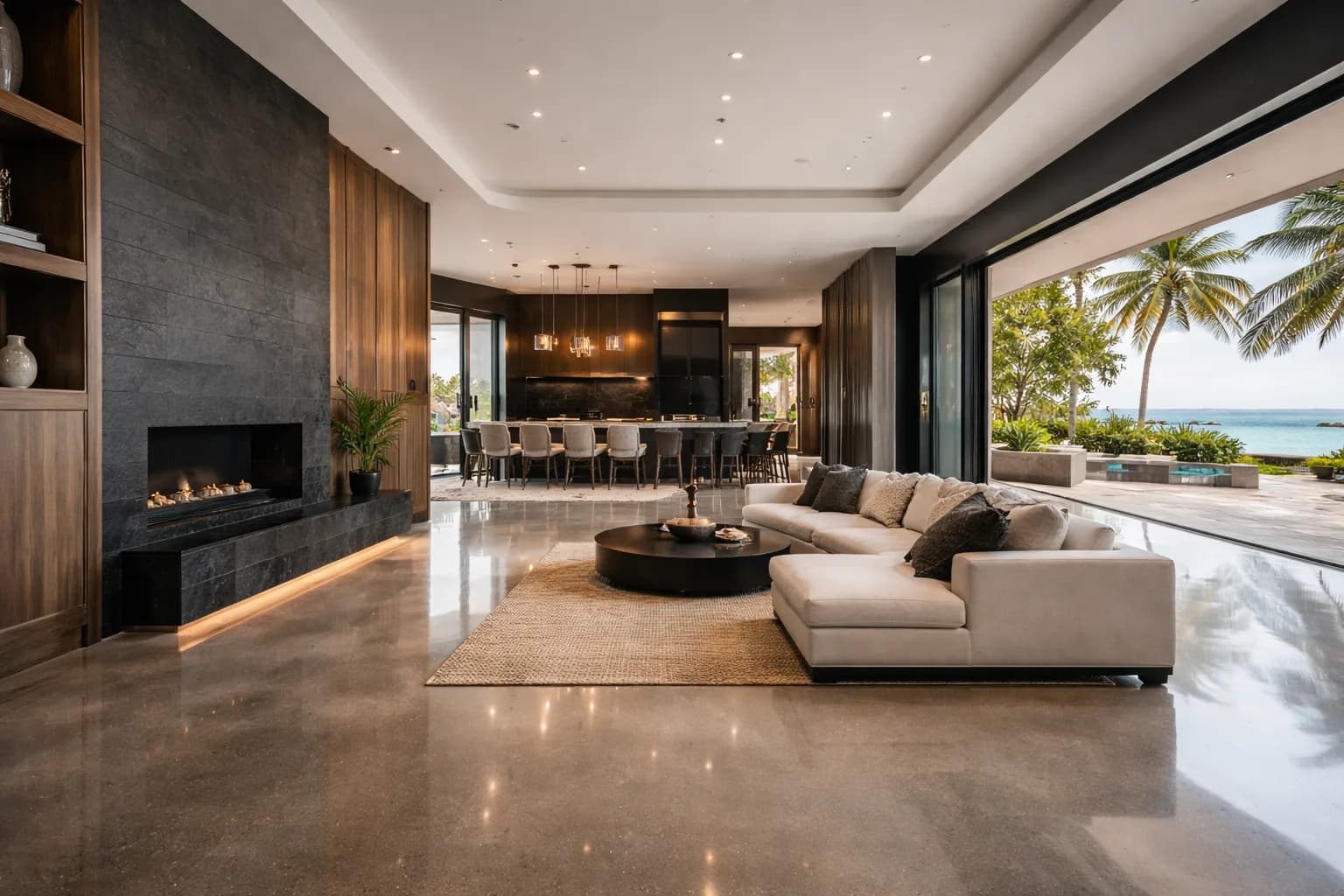
Honed concrete driveways are becoming the go-to choice for Gold Coast and Brisbane homeowners who want something cleaner, more refined, and lower-maintenance than exposed aggregate or pavers. The result is a smooth, matte-finish surface that handles vehicle traffic, resists staining, and looks good for decades with minimal upkeep.
This guide covers what a honed concrete driveway actually involves, what it costs, how it compares to alternatives, and whether it suits your home.
What Is a Honed Concrete Driveway?
A honed concrete driveway is a standard concrete slab that's been mechanically ground with diamond tooling to produce a smooth, low-sheen surface. The grinding removes the top layer of cement paste and, depending on how deep you go, reveals varying amounts of the aggregate (stone) beneath.
The floor is then sealed with a protective coating that guards against oil, tyre marks, and weather exposure. The result is a clean, contemporary finish that sits somewhere between raw concrete and a fully polished floor.
Unlike decorative concrete stamps or stencils, honed concrete doesn't rely on a surface pattern that can wear away. The finish is the concrete itself, ground smooth and sealed. It won't peel, crack, or delaminate the way painted or coated driveways can over time.
Why Gold Coast and Brisbane Homeowners Are Switching
Exposed aggregate has been the default driveway finish in South East Queensland for years. It works. But more homeowners are moving to honed concrete for a few practical reasons:
- Cleaner look: no loose stones, no rough texture catching dirt and leaves
- No weeds: unlike pavers, there are no joints for weeds to push through
- Low maintenance: sweep and hose down occasionally, re-seal every few years
- Modern aesthetic: honed concrete suits contemporary home designs better than the busy texture of exposed aggregate
- Seamless connection: if your indoor floors are honed or polished concrete, the driveway can match, creating a continuous look from street to front door
The warm, dry climate on the Gold Coast and in Brisbane is ideal for honed concrete. UV-stable sealers protect the surface, and the matte finish stays cool underfoot compared to dark-coloured pavers or tiles.
How Much Does a Honed Concrete Driveway Cost?
Driveway pricing depends on whether you're working with an existing slab or pouring new.
Existing Slab: Hone and Seal
If you already have a concrete driveway in reasonable condition, grinding and sealing is the most cost-effective option:
- Includes diamond grinding, surface preparation, and a quality penetrating or topical sealer
- Additional cost applies if existing coatings, paint, or adhesive need to be removed first
- Pricing depends on driveway size, slab condition, and sealer type
New Pour: Pour, Hone and Seal
If you're building new or replacing an old driveway entirely:
- The honing and sealing is quoted as a separate component on top of the concrete pour cost
- The concrete pour itself is typically quoted separately by your concreter
- You can specify the aggregate mix in the pour to achieve a particular look, such as river pebble, crushed granite, or coloured stone

What Affects the Price?
- Driveway size: larger areas are more cost-effective per square metre
- Slab condition: cracks, coatings, or uneven surfaces require extra preparation
- Grind depth: a light cream hone costs less than a deep exposed aggregate finish
- Sealer type: non-slip sealers for steep driveways cost slightly more than standard options
- Access: tight driveways or sloped blocks take longer than flat, open slabs
For a detailed breakdown of honing costs across different applications, see our honed concrete cost guide.
Durability and Maintenance
Concrete is one of the most durable building materials available. A properly honed and sealed driveway handles daily vehicle traffic, including heavy vehicles, without issue.
Day-to-day maintenance:
- Sweep or blow off leaves and debris
- Hose down occasionally to remove dirt buildup
- Clean oil or tyre marks with a mild degreaser as needed
Long-term maintenance:
- Re-seal every 3–5 years depending on traffic and weather exposure
- Re-sealing is a straightforward process: clean the surface, apply a fresh coat of sealer, and let it cure
- No grout to scrub, no pavers to re-lay, no loose aggregate to sweep up
A honed concrete driveway should last the lifetime of the slab itself, which is typically 25–30+ years for a well-poured residential driveway. The honed finish doesn't wear away in the same way a topical coating might, because the finish is the concrete rather than a layer applied on top.
Honed Concrete vs Exposed Aggregate Driveways
This is the most common comparison homeowners ask about. Here's how they stack up:
| Feature | Honed Concrete | Exposed Aggregate |
|---|---|---|
| Appearance | Smooth, matte, contemporary | Textured, stone-visible, traditional |
| Maintenance | Sweep + hose, re-seal every 3–5 years | Sweep + hose, re-seal every 3–5 years |
| Slip resistance | Good; matte surface + non-slip sealer | Good; textured stone surface |
| Weed growth | None; seamless surface | None; seamless surface |
| Loose stones | None | Some stone pop-out possible over time |
| Stain resistance | Excellent when sealed | Good but textured surface traps dirt |
| Cleaning ease | Easy; smooth surface wipes clean | Harder; texture holds grime |
| Cost (hone/seal existing) | Varies by slab condition and size | N/A (aggregate is set during pour) |
| Cost (new pour + finish) | Hone and seal quoted on top of pour | Aggregate finish set during pour |
| Best for | Modern homes, clean aesthetic | Traditional homes, character look |
Neither finish is objectively better; it depends on the look you want and how much time you want to spend cleaning. Honed concrete is easier to keep clean because the smooth surface doesn't trap dirt the way textured aggregate does.
Is Honed Concrete Slippery for Driveways?
No. This is one of the most common concerns, and it's worth addressing directly.
Honed concrete has a matte, low-sheen finish, not a mirror-like gloss. The grinding process retains enough micro-texture in the surface to provide solid grip, even when wet. It's significantly less slippery than polished tiles or fully polished concrete.
For driveways with a slope, we apply a non-slip sealer that adds extra traction without changing the appearance. This is standard practice for any driveway or outdoor application.
Honed concrete consistently meets the slip resistance standards required for outdoor residential surfaces in Australia. If you're concerned about a steep driveway, we can advise on the best sealer and finish combination for your specific gradient.
Get a Quote for Your Driveway
The best way to know what your driveway project will cost is to request a free quote. Whether you're honing an existing concrete driveway or planning a new pour, get in touch for a free quote. We inspect the slab, discuss your finish preferences, and provide a written quote with no hidden costs.
ICGC works with homeowners and builders across the Gold Coast, Brisbane, and Northern Rivers. We handle the full process, including surface preparation, grinding, honing, and sealing, as a single job.
Learn more about honed concrete on the Gold Coast or honed concrete in Brisbane, or read our full guide on what honed concrete is and how it works.
We typically respond same day.