
Polished Concrete Floors: The Complete Guide for Gold Coast & Brisbane
Everything you need to know about polished concrete floors: finishes, costs, maintenance, and how to choose the right option for your Gold Coast or Brisbane project.
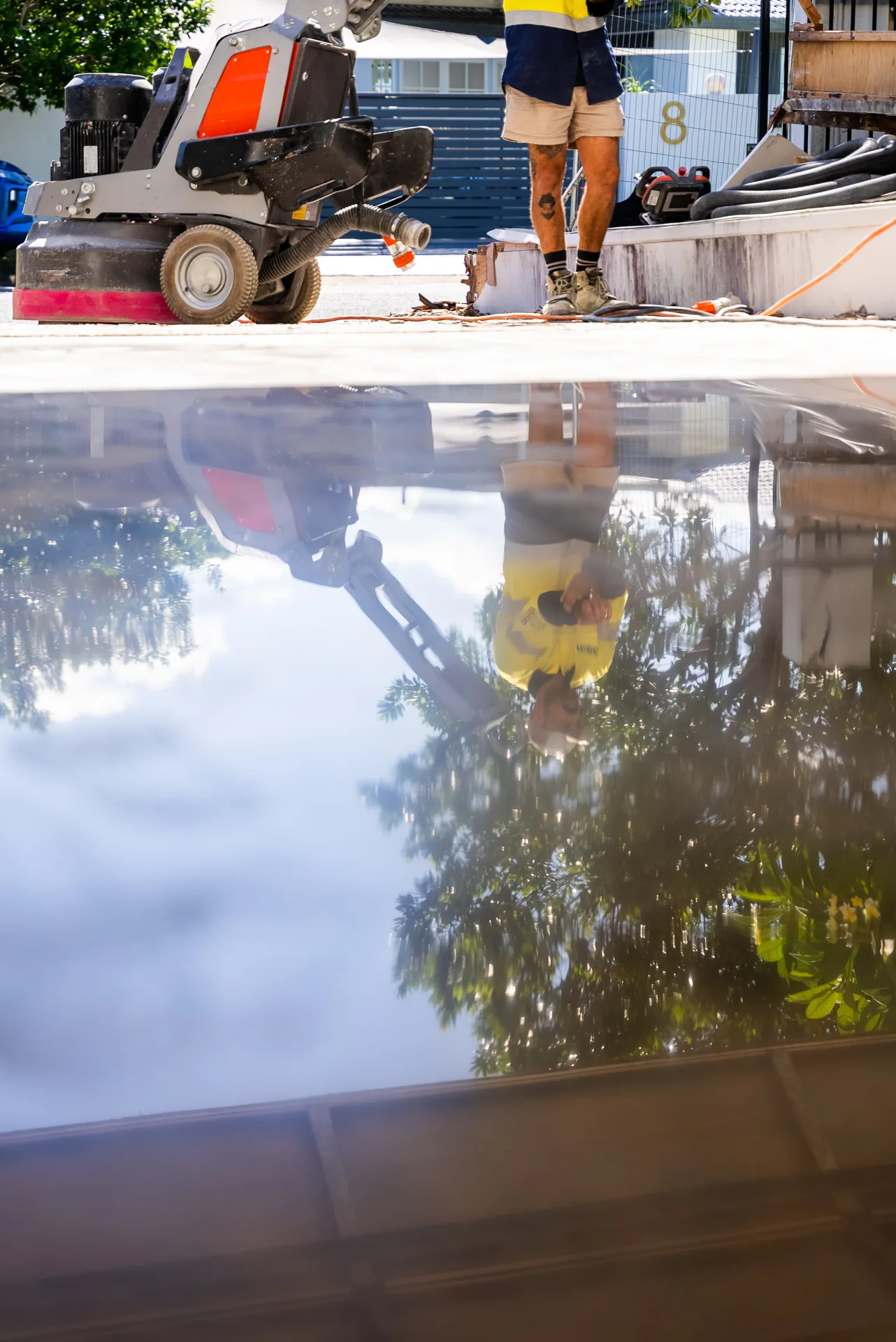
Polished concrete is one of the most durable, low-maintenance flooring options available. It transforms a standard concrete slab into a smooth, reflective surface that lasts decades with minimal upkeep. No coatings to peel. No grout lines to scrub. No replacement cycle every ten years.
Whether you're building a new home on the Gold Coast, renovating a Brisbane warehouse, or fitting out a retail space, polished concrete floors deliver a finish that looks better with age, not worse.
This guide covers everything: what polished concrete actually is, the finish options, realistic costs per square metre, the installation process, and how to maintain it long-term.

What Is Polished Concrete?
Polished concrete is a mechanically refined floor finish. Diamond tooling grinds the concrete surface through progressively finer grits, starting as coarse as 25 grit and finishing as fine as 3000 grit. At the higher grits, the concrete develops a natural sheen that ranges from a soft satin to a mirror-like gloss.
Partway through the process, a chemical densifier (lithium silicate) is applied. This penetrates the concrete and reacts with the calcium hydroxide in the slab to form calcium silicate hydrate, a hard, dense crystalline structure. The densifier fills the pores, hardens the surface, and makes the floor resistant to moisture and staining.
The critical distinction: a true polished concrete floor has no topical coating. The sheen comes from the concrete itself, refined mechanically. It can't peel, flake, or delaminate because there's nothing sitting on top of the slab.
This separates polished concrete from two commonly confused alternatives:
- Grind and seal: the concrete is ground to a low grit and then coated with a topical sealer (acrylic, polyurethane, or epoxy). The sheen comes from the coating, not the concrete. More affordable, but the sealer wears and needs reapplication every 3–5 years.
- Honed concrete: the concrete is mechanically ground like a polish, but the process stops at a lower grit (200–400). The result is a smooth matte or satin finish without the reflective gloss. Read our full guide to honed concrete for a detailed comparison.
Polished Concrete Finishes
The final look of a polished concrete floor depends on two things: how deep the grind goes and what aggregate is in the slab. Here are the main finish categories.
Cream Polish (Minimal Exposure)
The lightest grind removes only the surface cement paste. The result is a smooth, clean floor with a uniform cream or grey tone and very little visible aggregate. Cream polish suits modern, minimalist interiors where you want a refined surface without visual noise.
Salt and Pepper (Light Exposure)
A slightly deeper grind exposes the fine aggregate, small sand particles and stone chips, creating a subtle speckled pattern. This is the most popular finish for residential polished concrete across the Gold Coast and Brisbane. It has enough character to look interesting without being busy.
Medium Exposure
Grinding deeper reveals the mid-sized aggregate stones. The effect is similar to terrazzo, a distinct pattern of visible stones set in a smooth cement matrix. Medium exposure works well in open-plan living areas, commercial foyers, and retail spaces where you want the floor to make a statement.
Full Aggregate Reveal
The deepest grind exposes the large aggregate stones completely. The visual impact is bold. The floor becomes a showcase of the stone content in the slab. Full aggregate reveal is often specified for feature areas, lobbies, and high-end residential projects where the concrete mix has been selected specifically for its stone character.
Grind and Seal
Not a true polish, but a practical and cost-effective alternative. The slab is ground to a low grit (50–100) and coated with a clear sealer. The result is a clean, industrial-style floor at a lower price point. Grind and seal is popular for garages, workshops, and commercial spaces where function matters more than high gloss.
A note on aggregate: The stones in the slab determine the final look of any exposed finish. A slab poured with blue metal aggregate looks completely different from one with river pebble or crushed quartz. For new pours, you can specify the aggregate mix to achieve a particular result. For existing slabs, we always recommend a test grind, a small section ground to the target depth, so you can see exactly what the finished floor will look like before committing to the full area.
Where Polished Concrete Works Best
Residential Living Areas and Kitchens
Polished concrete is one of the best-performing flooring options for Gold Coast and Brisbane homes. It handles the indoor-outdoor lifestyle that defines living in South East Queensland: barefoot traffic, humidity, and the constant flow between inside and outside.
In open-plan living areas and kitchens, polished concrete creates a seamless, easy-to-clean surface that doesn't collect dust, harbour allergens, or trap moisture. Spills wipe up. Sand sweeps off. The thermal mass of the slab keeps floors cool in summer and retains warmth from winter sun.

Salt and pepper or cream polish are the most common residential choices. Both deliver a refined look that works with any interior style, from coastal to industrial to mid-century modern. For more on residential floor treatments, see our dedicated page.
Commercial and Retail Spaces
Polished concrete is standard flooring in commercial fit-outs across Brisbane and the Gold Coast. Retail stores, restaurants, showrooms, offices, and medical clinics all benefit from a surface that handles high foot traffic without showing wear.
The reflective properties of a polished floor increase ambient light levels, reducing the need for artificial lighting. The surface is seamless, with no grout lines or joins to catch dirt or trip hazards. And unlike vinyl, carpet, or engineered timber, polished concrete doesn't need periodic replacement.
Industrial and Warehouse Floors
For industrial applications, polished concrete hardens the surface against forklift traffic, pallet jacks, and heavy equipment. The densifier creates a dust-free floor that won't shed fine particles, which is important in food processing, pharmaceutical, and clean-room environments.
Industrial polishes are typically taken to a lower grit (400–800) for a functional satin finish rather than a decorative high gloss.
Outdoor Areas
Polished concrete is primarily an indoor finish. The high-gloss surface can become slippery when wet, and direct UV exposure can affect some sealers over time.
For outdoor areas such as patios, pool surrounds, driveways, and alfresco dining spaces, a honed concrete finish or grind and seal with a non-slip additive is usually the better choice. Both options offer the durability and low maintenance of a mechanically ground surface with better slip resistance for wet conditions.
What Drives Polished Concrete Cost?
Polished concrete pricing varies significantly from project to project. There is no single "per square metre" rate that applies across the board. Here are the factors that determine what your project will cost:
- Finish level: cream polish is the most affordable finish because it requires the fewest grinding passes. Salt and pepper sits in the mid-range. Full aggregate reveal requires the most grinding passes, the most diamond tooling, and the most time, making it the premium option. Grind and seal is typically the lowest-cost option overall.
- Slab condition: a new, clean slab costs less to polish than an old slab with coatings, adhesive residue, or surface damage that needs repair first.
- Area size: larger areas have a lower per-square-metre cost than small rooms due to setup and mobilisation costs being spread across more floor area.
- Access: ground-floor slabs with clear access cost less than upper levels, restricted sites, or occupied buildings.
- Existing coverings: if tiles, carpet, or vinyl need to come off first, that's additional work. Tile and adhesive removal is one of the most common preparatory steps for polished concrete.
The best way to know what your project will cost is to request a free quote. We inspect the slab, discuss finish options, and provide a written quote that covers the full scope.
The lifecycle argument: Polished concrete can cost more upfront than tiles, vinyl, or carpet. But over a 20-year period, the total cost of ownership is significantly lower. There's no replacement cycle (tiles crack, carpet wears, vinyl lifts), no re-grouting, and maintenance is a fraction of the cost. A well-maintained polished concrete floor lasts the life of the building.
How Polished Concrete Is Made (The Process)
A polished concrete floor is produced through a multi-step mechanical process. Here's how it works from start to finish.
1. Slab Assessment
Every job starts with an inspection of the existing slab. We check for cracks, low spots, surface coatings, adhesive residue, moisture content, and slab hardness. This determines the grinding sequence, the tooling required, and whether any repairs are needed before polishing starts.
2. Surface Preparation
If the slab has existing coverings such as tiles, vinyl, carpet glue, paint, or epoxy, these need to come off first. Surface preparation also includes filling cracks, repairing spalling, and levelling any uneven areas. A clean, sound slab is essential for a consistent polish.
3. Coarse Grinding (25–80 Grit)

The first grinding passes use coarse diamond segments to remove the surface cement paste and expose the aggregate to the desired depth. This is where the finish profile is established: cream, salt and pepper, medium, or full exposure.
Planetary grinding machines (not hand-held angle grinders) are essential for a flat, consistent result. The machine's counter-rotating heads ensure even material removal across the full width.
4. Densifier Application
After coarse grinding, a lithium silicate densifier is applied to the floor. The densifier soaks into the open pores of the concrete and chemically reacts to form a harder, denser surface. This step is critical. It strengthens the concrete, reduces porosity, and creates the foundation for the final polish.
5. Fine Grinding (100–400 Grit)
Progressive fine-grit passes refine the surface, removing the scratch pattern left by the coarse diamonds. Each grit level produces a smoother surface than the last.
6. Polishing (800–3000 Grit)
The final passes use resin-bonded diamond pads at very high grits. This is where the gloss develops. At 800 grit, you get a soft satin sheen. At 1500 grit, a clear reflective gloss. At 3000 grit, a mirror-like finish.
7. Final Seal
A penetrating guard or sealer is applied as the last step. This protects against staining and makes the floor easier to maintain. Unlike a grind and seal, the sealer on a polished floor is a thin, penetrating product, not a thick topical coating.
The entire process is carried out dust-free using industrial vacuum extraction connected directly to the grinding equipment. This captures silica dust at the source and keeps the site clean, which is critical for occupied homes, active building sites, and commercial spaces.
Polished Concrete vs Tiles
This is one of the most common comparisons homeowners and builders ask about. Here's a quick overview:
| Factor | Polished Concrete | Tiles |
|---|---|---|
| Durability | 25+ years, no replacement | 10–15 years before cracking/lifting |
| Maintenance | Sweep and damp mop | Grout cleaning, re-grouting, re-sealing |
| Upfront Cost | Competitive; varies by finish level | Comparable or higher (supply + install) |
| Lifecycle Cost (20yr) | Lower; no replacement | Higher; includes re-tiling |
| Appearance | Seamless, reflective | Grout lines, pattern repetition |
| Installation Time | 3–5 days (typical home) | 5–10 days (including set time) |
| Thermal Performance | Excellent; stores heat/cool | Moderate |
We've written a detailed comparison in our blog post on polished concrete vs tiles for Gold Coast homes, including real cost breakdowns and case studies.
Polished Concrete vs Honed Concrete
Polished and honed concrete are produced by the same mechanical grinding process. The difference is where the process stops.
- Honed concrete is ground to approximately 200–400 grit. The surface is smooth and flat but has a matte or satin finish with no reflective gloss.
- Polished concrete continues to 800–3000 grit. The surface develops a visible sheen or high gloss.
Honed concrete is the better choice for outdoor areas, pool surrounds, and spaces where slip resistance matters. Its lower sheen also suits architectural styles that call for a more understated, natural finish.
Polished concrete is primarily an indoor finish, suited to living areas, kitchens, commercial spaces, and feature floors where the light-reflecting properties add to the design.
Neither is inherently better. The right choice depends on where the floor is, how it's used, and what look you're after. Read our full honed concrete guide for a side-by-side comparison.
How to Maintain Polished Concrete
One of the biggest advantages of polished concrete is how little maintenance it requires compared to other flooring types. Here's the routine:
Daily
Sweep or dust mop to remove grit and debris. Fine particles of sand and dirt act as an abrasive under foot traffic, so regular sweeping prevents micro-scratching of the surface.
Weekly
Damp mop with clean water and a pH-neutral floor cleaner. Avoid soap-based products, as they leave a residue that dulls the surface over time. A microfibre mop works best.
What to Avoid
- Acidic cleaners: vinegar, citrus-based products, and acidic bathroom cleaners will etch the surface.
- Harsh chemicals: bleach, ammonia, and solvent-based cleaners can damage the densifier and sealer.
- Abrasive pads: steel wool and scouring pads will scratch the polish.
Re-Sealing
The penetrating sealer typically lasts 3–5 years depending on traffic volume. Re-sealing is a straightforward process: clean the floor, apply a fresh coat, and allow it to cure. In residential settings with normal foot traffic, you may get 5+ years before re-sealing is needed.
Re-Polishing
Rarely required. If the floor loses its sheen after many years of heavy use, a maintenance polish (a single pass with high-grit diamonds) can restore the gloss without starting the full process again. Most residential polished floors never need re-polishing.
Can You Polish Existing Concrete?
Yes, and existing slabs often produce the most interesting results. Concrete that has aged for years develops a character that new pours don't have. The aggregate has settled, the surface has cured fully, and the colour variations tell a story.
That said, existing slabs usually need some preparation before polishing:
- Tile removal: old tiles and the adhesive beneath them need to come off cleanly. Tile and adhesive removal is one of the most common first steps in a polished concrete project.
- Coating removal: paint, epoxy, vinyl glue, and carpet adhesive must be ground away before the polishing sequence can begin.
- Crack repair: structural and surface cracks are filled with colour-matched epoxy or polyurea before grinding.
- Levelling: if the slab has high or low spots, these are addressed during the coarse grinding phase.
ICGC handles the full sequence, from stripping the existing floor covering through to the final polish. You don't need to coordinate multiple trades. See our concrete grinding, polishing, and honing page for more detail on how we approach these projects.
Choosing a Polished Concrete Contractor
The quality of a polished concrete floor depends almost entirely on the operator and equipment. Here's what to look for:

Commercial-grade equipment. A proper polished concrete floor requires planetary grinding machines, heavy, purpose-built units with counter-rotating diamond heads. If a contractor shows up with a hand-held angle grinder, the result will be uneven and inconsistent. Ask what machines they use.
Dust-free process. Concrete grinding generates silica dust, which is a serious health hazard. Any reputable contractor uses industrial vacuum extraction connected directly to the grinder. If they're not dust-free, they're not meeting current workplace health and safety standards.
Full-service capability. Many grinding contractors don't do tile removal, adhesive grinding, or surface preparation; they expect someone else to do it first. A full-service contractor like ICGC handles everything from demolition of existing coverings through to the final polish. One team, one point of contact, no gaps between trades.
Written quotes with specifications. A credible quote specifies the finish level, the exposure depth, the number of grinding passes, the densifier product, and the sealer type. Vague quotes that just say "polished concrete" leave too much room for a substandard result.
Local experience. Concrete varies by region. The aggregate mixes common on the Gold Coast differ from those in Brisbane and the Northern Rivers. A contractor with local experience knows what to expect when they start grinding, and how to get the best result from the specific slab they're working with.
Get a Quote
The best way to know what polished concrete will cost for your specific project is to request a free quote. If you're considering polished concrete for your Gold Coast, Brisbane, or Northern Rivers project, we'd like to hear from you. We'll assess your slab, recommend the right finish, and provide a detailed written quote covering the full scope, with no obligation and no hidden costs.
Request your free quote or call us to discuss your project. We typically respond same day.