
Mechanically Polished vs Grind & Seal: Which Concrete Finish Is Right?
Two ways to finish a concrete floor: mechanically polished or grind and seal. Here's how they differ in durability, appearance, cost, and maintenance.
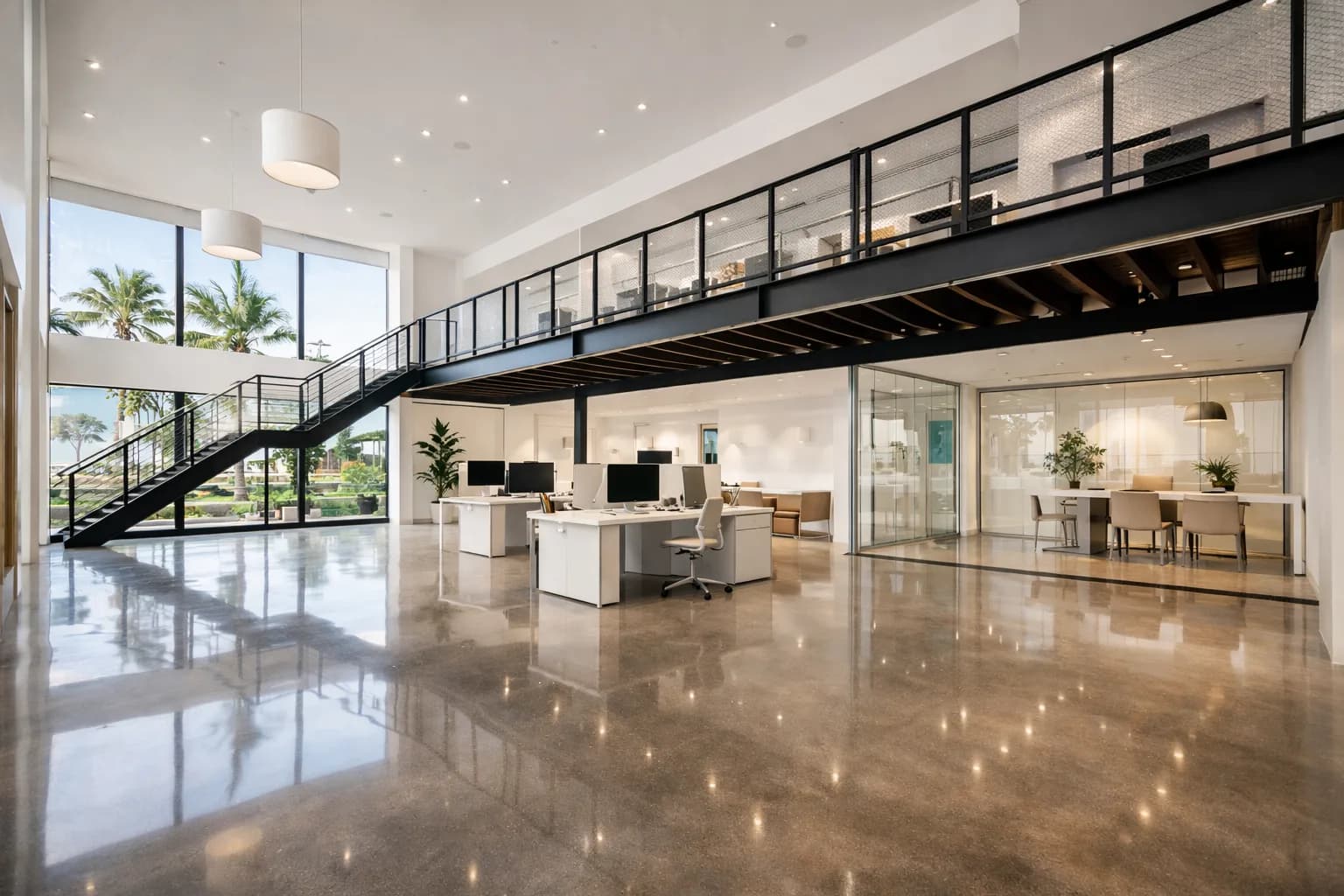
Walk into a showroom with a mirror-like concrete floor and a garage with a glossy sealed surface. Both look polished. But they're produced by fundamentally different processes, they perform differently over time, and they cost different amounts to install and maintain.
Mechanically polished concrete and grind and seal are the two main methods for finishing a concrete floor. Understanding the difference helps you make the right choice for your space, budget, and long-term expectations.
Two Ways to "Polish" Concrete
The term "polished concrete" gets used loosely. In practice, there are two distinct approaches:
Mechanically polished concrete: the surface is progressively ground with diamond tooling through increasingly fine grits (up to 3000 grit), and a chemical densifier is applied to harden the surface. The sheen comes from the concrete itself. No topical coating is applied.
Grind and seal: the surface is ground (typically to 100–400 grit), then a topical sealer or coating is applied on top. The sheen comes from the sealer, not the concrete.
Both produce attractive, functional floors. The difference is where the finish lives, in the concrete or on top of it, and that distinction drives everything: durability, maintenance, lifespan, and cost.
What Is Mechanically Polished Concrete?
Mechanically polished concrete is produced by grinding the slab through a multi-step process using progressively finer diamond tooling. A typical sequence runs from 30 or 50 grit (coarse, for levelling and initial stock removal) through to 1500 or 3000 grit (ultra-fine, for high-gloss finish).
During the process, a lithium-based densifier is applied. The densifier penetrates the concrete and reacts chemically with the calcium hydroxide in the slab, producing calcium silicate hydrate, a hard, dense crystalline structure that permanently strengthens the surface.

The result is a floor where the sheen and hardness are part of the concrete. There's no coating on top to scratch, peel, or wear through. The finish is the concrete.
Key characteristics:
- High-gloss, reflective surface (or satin if stopped at a lower grit)
- Extremely hard and abrasion-resistant
- Stain-resistant: densified concrete is less porous than untreated slabs
- The finish improves with use. Foot traffic actually enhances the sheen over time
- No topical coating to re-apply
What Is Grind and Seal?
Grind and seal is a simpler, faster process. The slab is ground to a relatively coarse or medium grit, enough to smooth the surface and expose some aggregate if desired, and then a topical sealer is applied on top.
The sealer does the visual work. It can produce a high-gloss, satin, or matte finish depending on the product used. Epoxy, polyurethane, and acrylic sealers are the most common options, each with different performance characteristics.

Key characteristics:
- The sheen comes from the sealer, not the concrete
- Faster to install, with fewer grinding steps
- Lower upfront cost than mechanical polishing
- The sealer can be tinted, coloured, or combined with decorative flakes
- Sealer wears over time and needs periodic re-coating (every 3–5 years depending on traffic)
Comparison Table
| Feature | Mechanically Polished | Grind and Seal |
|---|---|---|
| How the finish is created | Diamond grinding to 3000 grit + densifier | Grinding to 100–400 grit + topical sealer |
| Where the sheen comes from | The concrete itself | The sealer on top |
| Durability | Extremely high; lasts the life of the slab | Moderate; sealer wears and needs re-coating |
| Longevity | 20+ years before re-polishing | 3–5 years before re-sealing |
| Maintenance | Sweep + damp mop | Sweep + damp mop (avoid harsh chemicals on sealer) |
| Appearance | Natural, deep reflective clarity | Can look similar but sheen is surface-level |
| Stain resistance | High; densified surface repels penetration | Moderate; depends on sealer quality |
| Slip resistance | Moderate (higher grit = more slippery) | Variable; depends on sealer and additives |
| Upfront cost | Higher upfront investment | Lower upfront cost |
| Lifetime cost | Lower; minimal ongoing maintenance | Higher; periodic re-sealing adds up |
| Best for | Commercial, luxury residential, high-traffic | Garages, workshops, budget projects, outdoor |
| Re-coating schedule | None; buff and re-polish if needed | Every 3–5 years |
When to Choose Mechanically Polished Concrete
Mechanical polishing makes sense when you want a floor that lasts the lifetime of the building with minimal ongoing maintenance.
High-traffic commercial spaces: retail stores, supermarkets, warehouses, showrooms, and office buildings. The densified surface handles heavy foot traffic and equipment without wearing through. Many polished commercial floors installed 15–20 years ago still look excellent with nothing more than regular cleaning.
Luxury residential: open-plan living areas, kitchens, and indoor/outdoor transitions. A mechanically polished floor has a depth and clarity that grind and seal can't replicate. The reflection comes from within the concrete rather than sitting on top, which gives it a more natural, premium quality.
Long-term investment: if you're building or renovating and plan to stay for years, mechanical polishing pays for itself. The higher upfront cost is offset by near-zero maintenance costs over the floor's lifespan. No re-sealing every few years. No re-coating. Just sweep and mop.
ICGC delivers mechanically polished floors across the Gold Coast and Brisbane for both residential and commercial clients.
When to Choose Grind and Seal
Grind and seal makes sense when budget, timeline, or the specific application favours a topical finish.
Garages and workshops: these are working spaces where a full mechanical polish isn't necessary. A grind and seal with a durable epoxy or polyurethane coating handles oil, chemicals, and heavy loads. If the coating wears through in high-traffic areas, you re-coat that section rather than the whole floor.
Budget-conscious residential: if you want polished-look floors but the budget doesn't stretch to full mechanical polishing, grind and seal delivers an attractive result at a lower upfront cost. Factor in re-sealing costs every 3–5 years when comparing total cost of ownership.
Outdoor areas: patios, pool surrounds, and covered entertaining areas. Non-slip sealers applied over a ground surface provide good grip and weather resistance. Mechanical polishing is typically reserved for indoor applications because high-gloss surfaces can be slippery when wet.
Fast turnaround: grind and seal is quicker to install because it requires fewer grinding passes. If you need a floor finished within tight project timelines, grind and seal can often be completed in a day for standard-sized areas.
For outdoor and garage applications, our surface preparation and epoxy coatings service covers the full grind and seal process.
Can You Upgrade from Grind and Seal to Full Polish Later?
Yes. This is one of the advantages of starting with grind and seal: the path to a full mechanical polish remains open.
The existing sealer is stripped from the surface (mechanically or chemically), and the slab is then ground through the full progressive diamond sequence with densifier applied. The end result is identical to a floor that was mechanically polished from the start.

This makes grind and seal a practical first step if you're working within a tight renovation budget but want the option to upgrade later. The slab itself isn't changed by grind and seal; it's just coated. Remove the coating, and you're back to a raw slab ready for polishing.
The only caveat: if the slab has been coated with certain epoxy products, stripping can require additional grinding passes to remove all residue before polishing begins. This adds cost but doesn't prevent the upgrade.
Choosing the Right Finish for Your Floor
The decision comes down to three questions:
-
How long do you want the floor to last without intervention? If you want 20+ years of zero re-coating, mechanical polishing is the answer. If you're comfortable re-sealing every 3–5 years, grind and seal works fine.
-
What's the space used for? High-traffic commercial, luxury residential, and long-term owner-occupier homes favour mechanical polishing. Garages, workshops, rental properties, and outdoor areas favour grind and seal.
-
What's your budget, upfront vs lifetime? Mechanical polishing costs more upfront but less over time. Grind and seal costs less upfront but accumulates re-sealing costs. Over a 15-year period, the total cost of ownership can be similar.
Get a Quote
Not sure which approach suits your project? Request a free quote and we'll inspect the slab, discuss how the space will be used, and recommend the right finish for your needs and budget.
ICGC delivers both mechanically polished and grind and seal floors across the Gold Coast, Brisbane, and Northern Rivers. We handle the complete process, from surface preparation and grinding through to the final finish, as a single team.
Learn more about our polished concrete and honed concrete services, or explore other concrete finishes to find the right option for your space.
We typically respond same day.